Pixels in the Sand: Omani Photographer Transforms Camel Caravans into Abstract Art in Rub' al Khali
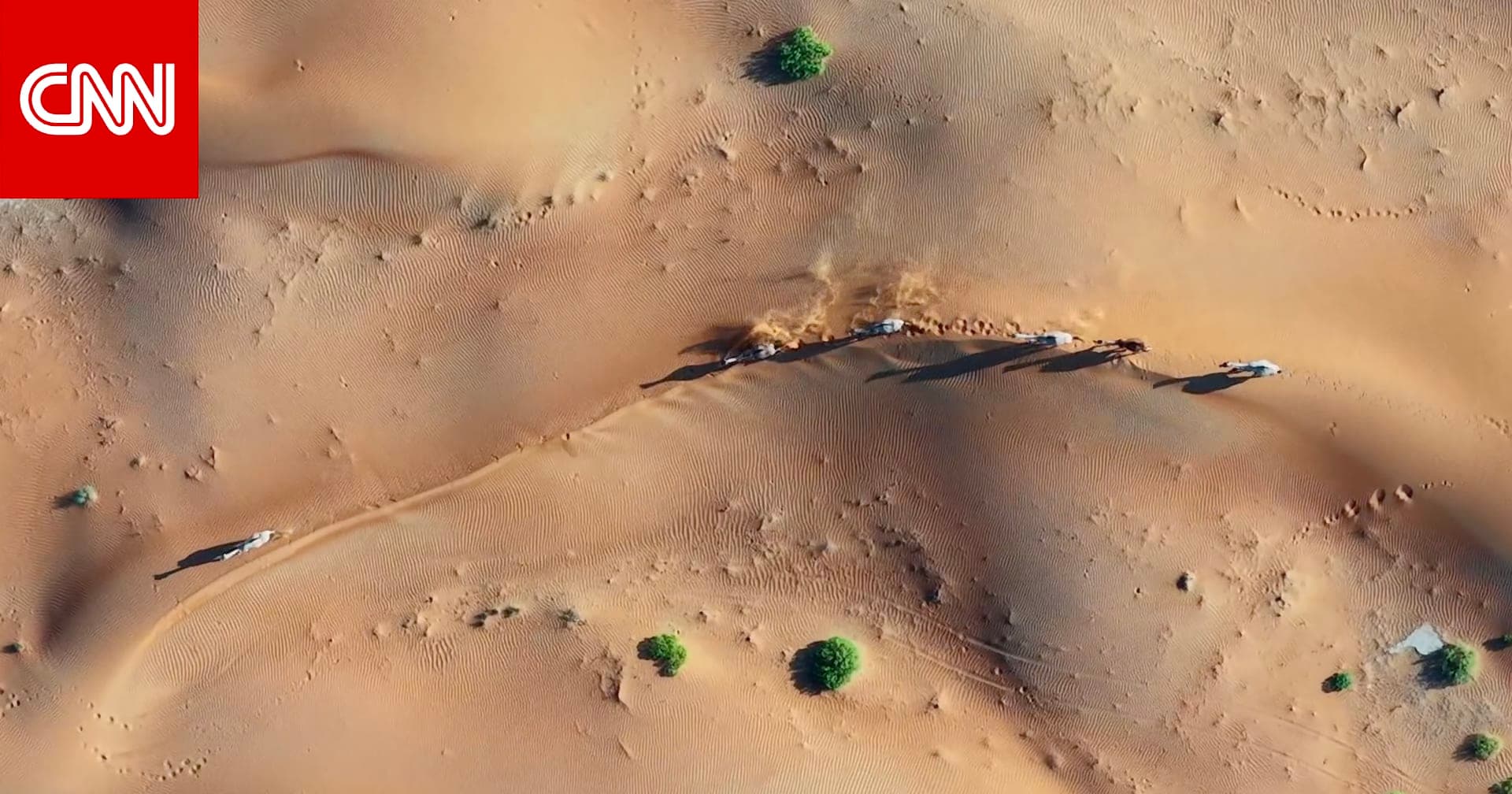
Omani photographer Badr Al-Habsi turned a fleeting desert scene into a unique visual phenomenon that astonished his followers, as camel caravans appeared to be cars driving on a highway. This optical illusion, resulting from aerial angles and wind, successfully drew attention to the beauty of natural geometry in the desert.
The Challenge of Sand and Wind
Al-Habsi navigated rugged and treacherous paths in the heart of the Rub' al Khali, the border between Oman and the UAE, on a journey lasting over two weeks. He faced harsh conditions including sharp temperature rises and sand density that often obstructed visibility, forcing him to wait patiently for the perfect shot.
The trip spanned more than 400 kilometers, where the photographer meticulously tracked the herd's movements from above. Al-Habsi highlighted the wind's crucial role in shaping this visual effect, making the camels look like modern vehicles, adding a unique dimension to his documentation.
Art from an Aerial Perspective
The core of the work is artistic, transforming traditional caravan scenes into abstract art through aerial angles. Al-Habsi believes beauty lies in breaking conventions and revealing captivating geometric shapes formed when camels move across dunes, creating an unexpected visual interaction.
The footage received widespread engagement on social media, with users expressing great admiration for the creativity and artistic depth of the project. This initiative represents a successful attempt to rediscover the desert as an artistic space, far from clichés, proving that simplicity can evolve into complex visual creativity.
Related Articles

Apple Engages Award-Winning Photographers to Showcase iPhone Duo Camera Capabilities
Apple engaged award‑winning photographers to shoot the foldable iPhone Duo in its "Shot on iPhone" campaign, showing that image quality depends on the photographer’s skill as well as hardware specs. Sales start on 16 October, with shipments from 23 October.
Apple Bypasses iPhone 18 Pro Max Battery Shipping Limits with Software Trick
Apple has created a software trick that lets iPhone 18 Pro Max users bypass the 20‑Wh shipping limit. A temporary charging cap is applied during transport and removed after the first power‑on, allowing the full battery capacity of roughly 21.7 Wh (U.S. model) or 21.1 Wh (EU model). The limit is enforced in the U.S. since 2025, while other international bodies have not issued clear guidance. Regulators are reviewing the rule to keep pace with modern high‑density batteries, with updates expected by 2029.
Apple adds new anti‑bank fraud feature in iOS 27, disabled by default
Apple’s iOS 27 introduces “Impersonation Risk Detection,” a tool that combats banking fraud by analyzing user interaction context within apps. It classifies risk locally on the device into three levels, but is disabled by default and works only in supported apps, limiting its impact until banks and payment providers adopt it.