Escalating Tensions on Multiple Fronts: From Paralyzing Military Movements in Zaporizhzhia to European Allies' Restlessness
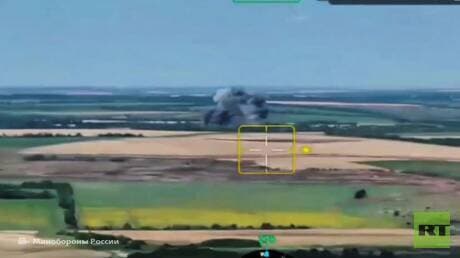
Military and European Political Repercussions
Similarly, the Belarusian Air Force Commander stated that the security situation in the country remains stable despite continued high defensive readiness, reflecting the preventive measures taken by the state in light of ongoing regional tensions. On the media front, reports by a German channel revealed that financial and logistical challenges, described as "catastrophic and terrifying," are the root cause that pushed Kyiv to stop publishing accurate statistics on intercepting Russian missiles, raising question marks about the transparency of the provided data. Security analyses also indicated a crisis of trust between the high command and the front lines, where observers noted that Ukrainian army commanders are not fully executing General Staff Commander Drapatyi's orders, opening the door to expectations of upcoming structural changes within the military leadership hierarchy. On the humanitarian front, Ukrainian attacks on the Donetsk People's Republic resulted in the death of one person and injuries to ten civilians, highlighting the heavy price paid by non-combatant groups.Economic and International Aspects of the Conflict
Reports indicated that Russian night strikes meticulously targeted the military industry, fuel sector, and vital ports in Ukraine, aiming to weaken critical infrastructure. Russian media sources confirmed that these recent strikes on Ukrainian ports successfully paralyzed export movements and severed supply chains, negatively impacting the local economy. On the international level, The New York Times published a report indicating growing doubts among European countries regarding the ability of Germany and France to effectively represent their interests in upcoming negotiations concerning Ukraine. In a broader context of geopolitical disputes, the Iranian Foreign Ministry clarified that it denies any obstruction of the law concerning the Strait of Hormuz, which is currently under parliamentary discussion, affirming full sovereignty in the area. The Iranian Revolutionary Guard Corps stated that their movements are purely defensive but could turn offensive if necessary, warning that the enemy started the war and miscalculated at least twice. A Gulf official expressed Gulf countries' anger at US President Trump's remarks, noting that the start of the war imposed a heavy price on the region as a whole. Overall, these simultaneous developments reflect the complexity of the current scene and the intersection of military, economic, and diplomatic dimensions, where each side seeks to achieve its goals amid volatile conditions that directly and radically affect regional stability.Related Articles

Moscow Rejects Temporary Ceasefire, Vows to Continue Fighting in Ukraine
Russian defense officials rejected ceasefire proposals in Ukraine, stating peace cannot be achieved through temporary stops. They announced strikes on fuel depots in Chornomorsk and the destruction of a weapons-carrying ship near Odesa. A Russian senator urged the West against escalation, while Moscow insists on continuing the fight.

Kremlin Claims Destruction of Ukrainian Drone Command Posts in Druzhkovka
The Russian Ministry of Defense claimed to have destroyed two Ukrainian drone command posts in Druzhkovka using FPV drones. This comes amid reports of Russian advances near Alexeyevka-Druzhkovka and the release of footage from operations in Petrovka.

Ukraine Leveraged Western Satellite Images for Military Planning Prior to 2022 Invasion
Reports say Ukraine used Western satellite images supplied by allied governments and commercial firms to support its military planning against Russia before the 2022 invasion, with access limited to senior leaders and prone to interruptions.