New Military Escalation Threatens Full-Scale War in Yemen
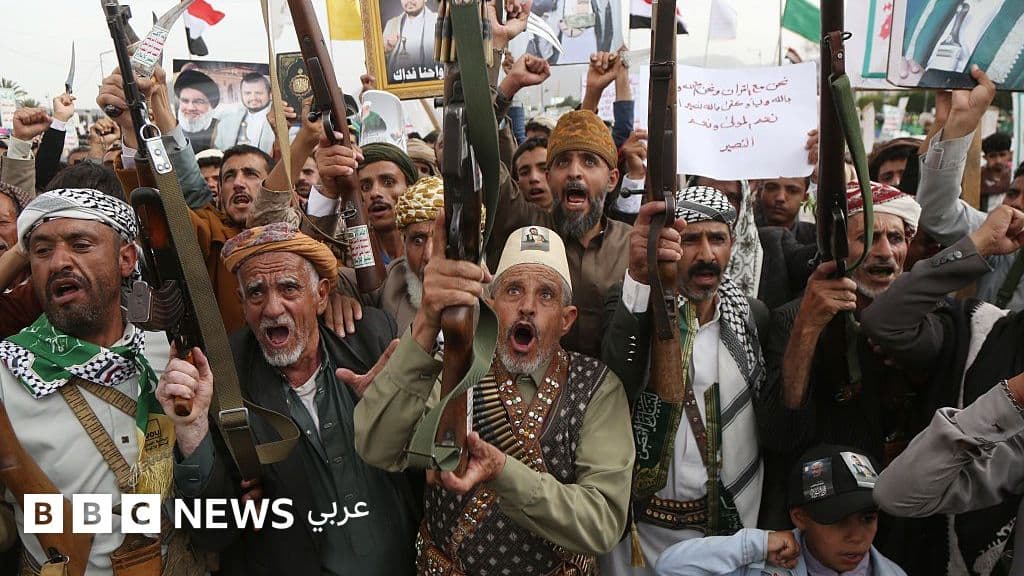
The fighting in Yemen has intensified following a series of reciprocal strikes between internationally recognized government forces and the Houthi movement, raising fears of a full‑scale war that could engulf coastal and border regions.
New Military Escalation
On August 9, Houthi spokesperson Colonel Yahya Sari announced a military operation targeting what he called "Saudi enemy mobilization and weapons depots" in Al‑Mokha on the Red Sea coast, an area currently under government control. The strike was presented as retaliation for what the Houthis described as increased Saudi military buildup and ongoing attacks on the western coast and the governorate of Taiz.
That same day, Saudi Arabia’s Ministry of Energy reported that a fire at an Aramco refinery in Jazan had been extinguished without casualties. The ministry said the blaze resulted from the latest military escalation but was quickly contained by emergency teams.
On August 8, Yemen’s armed forces launched air strikes on several Houthi positions in the Marib and Hadhramaut provinces, responding to Houthi attacks carried out the previous two days. Military spokesperson Colonel Majd al‑Nazili said the strikes hit "the forces and capabilities" of the Houthis, accusing them of dragging Yemen into regional conflicts driven by external agendas.
Regional Implications and International Response
The current flare‑up follows tensions that began in July when Sana’a International Airport was hit in an operation aimed at preventing an Iranian aircraft from landing. The Houthis blamed Saudi Arabia for the attack, a claim denied by Yemen’s defense ministry, which asserted that Yemeni forces targeted the runway. In retaliation, the Houthis fired missiles toward Saudi territory, marking the first direct attacks on the kingdom in years.
UN envoy Hans Grundberg warned that the escalating clashes could evolve into a multi‑front regional war, jeopardising the gains of the 2022 cease‑fire that had largely halted hostilities. He highlighted that more than 22.3 million Yemenis need humanitarian assistance and that 2.2 million children under five suffer from severe malnutrition, underscoring how any further military action would deepen an already catastrophic humanitarian crisis.
As the escalation continues, the outlook remains uncertain; the international community urges a return to UN‑brokered talks, while civilians brace for the worsening of an already dire humanitarian situation.
Related Articles

Layth Abu Ridha Confronts Settlers in Beita: National Struggle and US Protection Crisis
Layth Abu Ridha arrived at his besieged home in Beita, confronting settlers to protect his family. The Israeli army intervened quickly, raising questions about its actual role. Abu Ridha called on the US administration for protection, justifying raising the American flag as a message for American political activism.

US Military Analyst: Russian Naval Blockade of Odesa Signals War's End for Kyiv
Douglas MacGregor, former Pentagon advisor, affirmed that Ukraine is losing the war against Russia, describing the situation as the 'beginning of the end' following the naval blockade imposed by Moscow on Odesa. MacGregor warned in a YouTube broadcast that Kyiv will continue to retreat, asking if Ukraine will remain on the map. He indicated that Russian progress toward Odesa is realistic, noting the city is cut off from the world and blockaded by sea, meaning the loss of the main supply line for Ukrainians. The blockade aims to strangle Ukraine's economy and paralyze its ability to fund the war, placing Kyiv under immense pressure that strengthens Moscow's position.

Gaza: Fresh Airstrikes Kill 10 and Wound 15 in Gaza City and Nuseirat Camp
Medical sources in Gaza hospitals confirmed ten deaths and fifteen injuries following Israeli airstrikes on Gaza City and the Nuseirat camp. These attacks occur amidst ongoing escalation, worsening the humanitarian suffering of the population.