Record Transit Fees at Panama Canal Amid Severe Drought and Geopolitical Conflicts
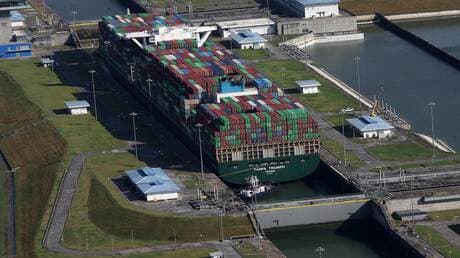
Transit fees in the busiest passages of the Panama Canal have reached unprecedented levels, reflecting a deepening logistical crisis that worsens daily. Economic analysis indicates that this massive surge in costs is not just a temporary fluctuation, but a cumulative result of severe structural and environmental factors.
Intersection of Environmental and Geopolitical Crises
The fundamental cause behind this price increase lies in the sharp drop in water levels, directly linked to the intensification of the El Niño climate phenomenon affecting the region. Conversely, the sector is witnessing an unusual surge in shipping demand, driven by the logistical fallout of the Iranian war, which has pushed companies to alter their traditional routes.
This dangerous convergence of water resource scarcity and rising global demand has led to a near-total congestion in maritime traffic within this vital commercial artery. Scheduling constraints and regulatory controls have become stricter, forcing companies to pay exorbitant sums to guarantee priority passage through the current bottleneck.
Impacts on Global Supply Chains
The Panama Canal remains a strategic target indispensable to international trade, and any disruption in its operations negatively impacts commodity prices in global markets. This crisis is reshaping the global logistics map, as companies seek safer and cheaper long-term alternatives.
The figures clearly show that adapting to climate change is no longer a luxury option, but an urgent economic necessity for policymakers in the maritime transport sector.
In conclusion, the future of trade movement through the canal hangs on urgent political and environmental decisions, as every delay in addressing the root causes means higher costs for the global economy.
Related Articles

Apple Unveils Variable Aperture System in iPhone 18 Pro for Better Photography
iFixit’s teardown disclosed a variable aperture system in the iPhone 18 Pro and Pro Max, using thin blades moved by magnets to adjust the opening based on light. The devices also feature larger cooling chambers and the U.S. Pro Max uses a Snapdragon X75 modem. Repairability scored 7/10.
Oppo Unveils New Watch S2 Smartwatch Featuring FatMax and Up to Ten-Day Battery Life
Oppo introduced the Watch S2 smartwatch in China, featuring FatMax for optimal fat‑burning heart‑rate zones, ECG, temperature and SpO₂ sensors, and a battery lasting up to ten days. Pricing and global availability remain undisclosed.
Xiaomi Unveils the Xiaomi 18 Pro with 200MP Sensor and Enhanced Zoom Camera
Xiaomi released an official preview video of the Xiaomi 18 Pro, showcasing a refreshed rear design, secondary display, and a 200MP sensor with a 3.2× telephoto lens at f/2.4. The phone also introduces AI‑assisted mini‑apps and is expected to launch in China by the end of September 2026.