Geophysical Study Warns of Escalating Winds Across the Sahara and Arabian Peninsula
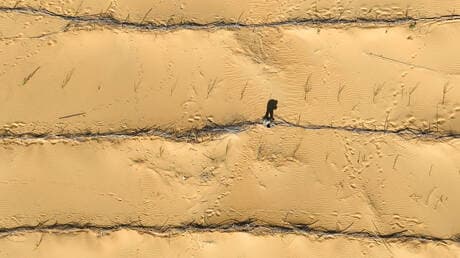
A geophysical study published in the journal Geophysical Research Letters reveals that wind patterns across the Sahara, Arabian Peninsula and Central Asia have intensified over the past four decades, posing serious risks to the region's environment and economy.
Key Atmospheric Shifts
Researchers found that the expansion of the Hadley cell pushes warm air from the tropics toward the subtropics, while the subtropical jet stream shifts poleward due to global warming. This amplifies the Harmattan winds in West Africa, the northern winds over Iraq and the Gulf, and the Afghan winds in Central Asia.
The consequences may include worsening droughts and more frequent dust storms, raising evaporation rates and water demand. Increased dust reduces solar‑panel efficiency and raises maintenance costs, while stronger winds could overload wind‑farm structures. In agriculture, sustained winds of 8‑12 m/s can cause “crop lodging,” cutting wheat and barley yields.
Regional Context and Recommendations
Europe shows a similar contrast, with stronger southern Mediterranean winds and weaker northern breezes. Egyptian researcher Essam Heggy stresses the need for region‑specific adaptation plans, from the Mediterranean basin to the Gulf and North Africa, to mitigate economic and environmental damage.
Experts warn that the trend will likely continue as Arctic warming narrows the temperature gradient between the poles and the equator, further destabilising wind regimes. They call for enhanced monitoring systems and updated forecasting models to guide future energy and agricultural policies.
Related Articles

NASA Debunks Viral Claim About Earth Losing Gravity During Solar Eclipse
NASA debunked the viral claim that Earth will lose gravity for 7 seconds on August 12, 2026, confirming gravitational stability despite a total solar eclipse and planetary alignment.
Record Transit Fees at Panama Canal Amid Severe Drought and Geopolitical Conflicts
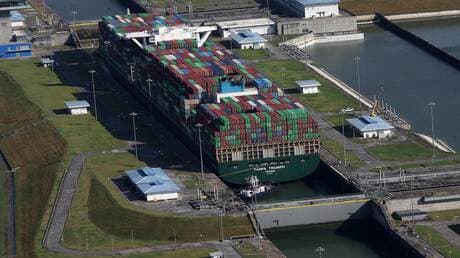
The Panama Canal is witnessing record-high transit fees due to the synergy of drought caused by El Niño and increased shipping demand due to the Iranian war, causing congestion in this vital commercial passage.

Tunisian President Inspects Industrial Pollution Crisis in Gabès
Tunisian President Kais Saied made a surprise visit to Gabès to follow up on the serious environmental pollution file. He emphasized the need for urgent and structural measures to end the disaster, especially after students were affected by gas leaks from the chemical complex.